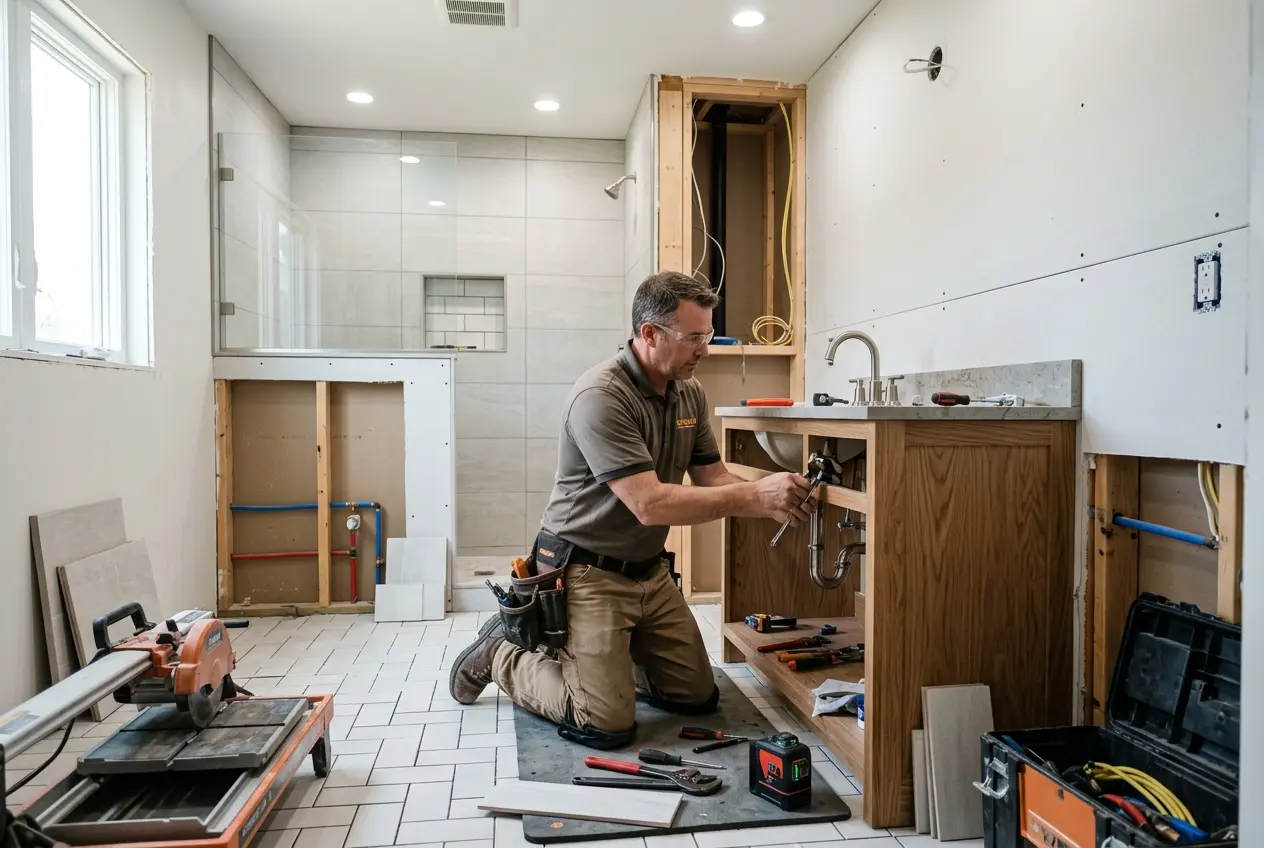
Adding bathrooms to Dorchester triple-deckers or Quincy Capes requires innovative solutions. We've built powder rooms under staircases, created ensuite baths from closet spaces, and even designed nautical-inspired head compartments in waterfront properties.
Our team navigates Boston's complex permitting process, including zoning variances for historic districts. Projects might involve: cantilevering over existing footprints in Newton's tight lots, soundproofing shared walls in Brookline apartments, or designing coastal-resistant materials for Quincy's salt-air environment. Every addition considers resale value with neighborhood-appropriate finishes.
Our team navigates Boston's complex permitting process, including zoning variances for historic districts. Projects might involve: cantilevering over existing footprints in Newton's tight lots, soundproofing shared walls in Brookline apartments, or designing coastal-resistant materials for Quincy's salt-air environment. Every addition considers resale value with neighborhood-appropriate finishes.
Our Process
- 01 Step 1: Zoning analysis and space potential assessment
- 02 Step 2: Architectural design matching existing structure
- 03 Step 3: Specialized foundation work for tight spaces
- 04 Step 4: Climate-appropriate material installation
Benefits
- Navigates Boston's permit maze efficiently
- Space-creating solutions for small footprints
- Materials that withstand microclimates
- Seamless architectural integration
Frequently Asked Questions
Can you add a bath without losing bedroom space?
We frequently create compartmentalized layouts that tuck showers into former closet depths while maintaining sleeping areas.
How do you handle additions on sloped lots?
Our structural engineers design stepped foundations that follow Newton's terrain while meeting seismic codes.